
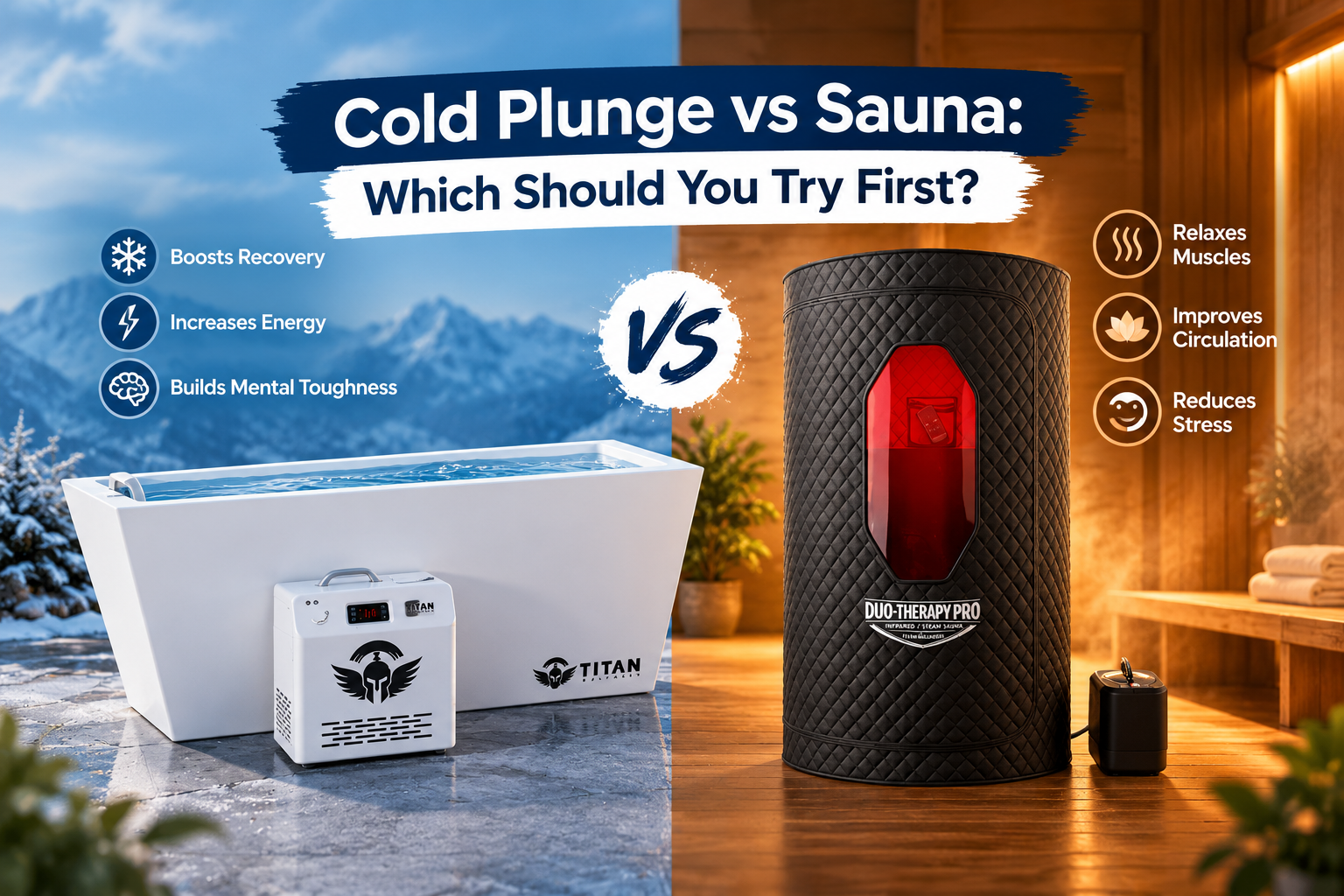
- October 5, 2026
Simple answer: sauna for relaxation and heat-based wellness, cold plunge for recovery and soreness
Trying to pick between a cold plunge and a sauna? Start with your goal, not the product. If you want relaxation and general heat exposure, a sauna is the easier first move. If sore muscles and workout recovery are what’s driving you, a cold plunge probably makes more sense. There’s decent research behind both. A 2023 review of 28 studies found cold water immersion did a good job cutting down muscle soreness after hard training. Heat has its own track record too. A separate review of 15 studies found heat exposure dropped systolic blood pressure by roughly 3.94 mmHg and diastolic by about 3.88 mmHg compared to control groups.
How Sauna and Cold Plunge Therapy Differ
So, here’s the basic difference.
Cold plunge: you’re getting into cold water.
Sauna: you’re sitting in a hot room.
Not exactly rocket science. But inside your body, these two are doing pretty different things. With cold water, the blood vessels right under your skin clamp down tight. It’s basically your body reacting to a shock. Your heart rate can jump, your blood pressure too, at least for a little while. There was a review back in 2024 that pulled together 27 separate studies on this, and they all pointed to the same thing: real changes in heart rate, blood pressure, and nervous system activity right after people got out of the cold. Heat flips that around. Your skin warms up, your core temperature climbs, and blood starts rushing toward the surface of your body instead of staying tucked away. Your heart has to work harder to push all that blood around. Neither one is really the “winner” here. It just depends on what you’re trying to get out of it in the first place.
If You Have to Pick Just One
There is no single right answer. It depends on what you want from the session:
- Want to relax? Start with a sauna.
- New to heat and cold therapy? Sauna is usually easier to start with.
- Want help with sore muscles after exercise? A cold plunge may be more useful.
- Want a quick burst of cold? Go with the cold plunge.
- Prefer a calm, longer session? Sauna may suit you better.
- Want to try both? You can use them together as contrast therapy.
Starting With Heat
A sauna warms your body before you move to cold water. You sit in the heat for a set amount of time, then cool down and drink some water. Regular sauna use has been linked to heart and blood pressure benefits, although more research is still needed. You also don’t need to stay in for a long time. If you’re new to sauna, start with shorter sessions and build up slowly. Looking for a home setup? The sauna collection has several options for regular use.
Starting With Cold
A cold plunge may be a better fit if your main goal is recovery after exercise. Research has found that cold water can help reduce muscle soreness after hard workouts and may help you feel more recovered the next day. You don’t need extremely cold water or long sessions to get started. If you’re new to cold plunging, start slowly and keep your first sessions short. If you’re wondering how to keep the water clean, the water maintenance guide covers the basics.
Is a cold plunge actually better for athletes?
For recovery specifically, yeah, it does have the stronger case. But it’s not a total win across the board. Cold water immersion doesn’t help with every single performance thing, and honestly some of the results are kind of mixed. A 2023 meta-analysis looked into this and found cold plunges beat other recovery methods when it came to soreness. But for things like power and flexibility, it landed about the same as everything else. That’s an important difference. A cold plunge can make you feel less sore without actually making you stronger or more athletic. Your training, sleep, and what you eat still matter way more. So think of cold exposure as one tool in the recovery toolbox, not something that replaces an actual training plan.
Is a sauna better for relaxation?
Pretty much, yeah. Heat kind of forces you to slow down. You just sit there, breathe, sweat a bit, no sudden shock you have to push through.
There’s also some research tying sauna use to heart health outcomes, though it’s the observational kind. There was one long-term study out of Finland that followed 2,315 middle-aged men for a median of just over 20 years. The people who used the sauna four to seven times a week had a lower observed risk of sudden cardiac death and other fatal heart-related events, compared to the ones who only went once a week.
Worth being upfront that this is an association, not proof that sauna use by itself caused the lower risk. Still, it lines up in a pretty interesting way with that controlled heat therapy research mentioned earlier.
Can you use both?
Sure, and you don’t have to commit to one forever. A lot of people run both as contrast therapy, usually sauna first, then straight into a cold plunge, rest, repeat if it’s working for them.
That said, contrast therapy isn’t automatically better just because it stacks two things together. A recent review of 21 studies found pretty limited evidence for clear long-term cardiometabolic benefits from alternating heat and cold. More solid research is still needed on that front. So do contrast therapy because you like it or it fits your routine, not because combining temperatures guarantees a bigger payoff. If that sounds like your thing, check out the contrast therapy collection, and it’s worth reading the contrast therapy review before you commit.
What should a first session look like?
Honestly, just ease into it. No need to crank the heat or the cold all the way up on your first go, and no need to sit there for an hour either. If sauna’s your starting point, keep the first few short. Find a spot you can actually relax in, have some water before you go and after you’re out, and if you start feeling dizzy or weak or sick to your stomach or just weird, that’s your cue to leave. Don’t tough it out. Just let yourself cool off on your own once you step out. Honestly the whole point of those first sessions is figuring out how you react, not trying to hit whatever number someone posted online. Cold plunge first? Go with water you can actually tolerate, not the coldest setting just because it sounds hardcore. Keep the first dip short too. Pay attention to how you’re breathing, keep your head above water, and if things start feeling off, lightheaded or confused or just plain uncomfortable, get out. Then warm up like you normally would. Cold water really does a number on your heart and blood pressure, so this isn’t something to power through just to prove a point.
Should you buy a cold plunge or sauna first?
Be honest about what you’ll actually use. Training several times a week and dealing with sore muscles regularly? A cold plunge probably gives you more direct value. Want a relaxing routine without the shock of cold water? Sauna’s easier to stick with long term. Budget and space matter here too. A product that just sits there gathering dust isn’t worth much, no matter how advanced it is. Before you buy, weigh the setup, the maintenance, the space it needs, running costs, and how often you’ll realistically use it. Worth browsing the Titan Wellness lineup to compare what’s out there.
Titan Wellness has built its name on home wellness gear, with over 50,000 customers and a large base of 5-star reviews behind it. They back that up with U.S.-based phone support, fast shipping out of California, a two-year nationwide warranty, and 30-day returns. HSA/FSA payment options can also help eligible customers save 30 to 40 percent, depending on the situation.
Is the Titan Cold Plunge a good starting point?
If cold water recovery is specifically what you’re after, sure, it’s a practical place to start. The advantage of a dedicated system comes down to consistency. No more buying bags of ice or rigging up some makeshift tub before every session. That makes it a lot easier to keep a routine going, and routines are really what make recovery habits stick.
Comparing models or just have questions? You can reach out to Titan Wellness directly, or read up on the Titan Wellness story before deciding.
What should you actually choose?
Short version. Sauna first if you want relaxation, you enjoy heat, you’re building a wellness routine, or you’d rather ease into thermal therapy than get shocked by it. Cold plunge first if you train often, soreness is your main issue, you want short focused recovery sessions, or you want recovery built into your training week. Both if you’ve already got experience with heat and cold, you like contrast therapy, you’ve got the space and budget, or you just want to experiment. Still unsure? Go with whatever matches your biggest problem right now. Sore after training, start cold. Need to unwind and slow down, start with heat.
One last thing to remember
Neither one is some magic shortcut to better health: sauna or cold plunge. They’re just tools. What you’re doing with your training, how much you’re sleeping, whether you’re staying hydrated, what you’re eating, your whole lifestyle basically- that stuff still matters way more than either of these on its own. And you really don’t need to chase the most extreme temperature or the longest session either. What actually matters is finding a routine you can stick with safely, one you’ll keep doing.
If you’ve got a cardiovascular condition, blood pressure that isn’t under control, you’re pregnant, you’re on medication that messes with blood pressure or how your body regulates temperature, or really any other health concern, talk to a doctor before you try either heat or cold exposure. For everyone else, just start slow and actually pay attention to how your body’s reacting. The best place to start isn’t whatever’s trending. It’s whatever fits your goal and whatever you’ll actually keep doing.
FAQs
1. Is a sauna or cold plunge better for beginners?
A sauna is usually the easier starting point since it’s less intense on the body. That said, if exercise recovery is your main goal, a cold plunge might actually be the smarter first pick.
2. Is a cold plunge better than a sauna after a workout?
When it comes to muscle soreness and short-term recovery, cold water immersion has the stronger track record. Research shows it can reduce soreness and improve how recovered people feel after tough workouts.
3. Can I use a sauna and cold plunge on the same day?
Yes, and a lot of people do exactly that through contrast therapy. Just ease into it. Let your body adjust rather than diving straight into long or extreme sessions.
4. How long should a beginner stay in a cold plunge?
Shorter is better when you’re starting out. There’s no single magic number since it depends on water temperature, your experience level, your health, and what you’re actually trying to get out of the cold exposure.
5. Does sauna use help with cardiovascular health?
There’s growing research pointing to real cardiovascular benefits from regular sauna use and heat therapy. One meta-analysis found improvements across several blood pressure measures, and observational studies have tied frequent sauna use to lower cardiovascular risk overall.
6. Should I choose Titan Wellness for my first cold plunge?
If you’re looking for a dedicated home cold water system, Titan Wellness is a solid one to put on your shortlist. It comes with US-based support, a two-year nationwide warranty, 30-day returns, and fast shipping out of California. Worth browsing the lineup to see what actually fits your space and your routine.
RECENT BLOGS
- October 5, 2026
Cold Plunge vs Sauna: Which Should You Try First?

- September 29, 2026
BEST BUDGET HOME SAUNA UNDER $1,000
- September 17, 2026
Best Cold Plunge Tubs of 2026: Full Buyer’s Guide
- July 20, 2026
Titan Contrast Therapy Bundle: Is Buying the Cold Plunge and Sauna Together Worth It?
More Blogs
Recent Blogs
Cold Plunge vs Sauna: Which Should You Try First?
October 5, 2026
Simple answer: sauna for relaxation and heat-based wellness, cold plunge for recovery and soreness Trying to pick between a cold plunge and a sauna? Start with your goal, not the product. If you want relaxation and general heat exposure, a sauna is the easier first move. If sore muscles and workout recovery are what’s driving you, a cold plunge probably
Read More
BEST BUDGET HOME SAUNA UNDER $1,000
September 29, 2026
The Titan Sauna Duo-Therapy Pro® stands out for combining infrared heat, steam and built-in red light therapy in one portable setup for $649. It gives you more than a single-mode sauna while staying comfortably within a $1,000 budget. Once you look at home sauna prices, a thousand dollars doesn’t seem like much. But it goes further than you’d think. You
Read More
Best Cold Plunge Tubs of 2026: Full Buyer’s Guide
September 17, 2026
Buying a cold plunge in 2026 isn’t quite like buying a basic ice bath anymore. Now you’ve got portable tubs, insulated inflatable plunges, rigid drop-stitch models, acrylic tubs, stainless steel setups, and full systems that come with a chiller and filtration built in. Sounds great on paper. But honestly, it can make picking the right one way more confusing than
Read More
Titan Contrast Therapy Bundle: Is Buying the Cold Plunge and Sauna Together Worth It?
July 20, 2026
Thinking about investing in hot and cold therapy equipment? Here’s the thing you should know: A Titan contrast therapy bundle is usually better than buying a cold plunge and sauna separately. You can get two therapies with one product – two products at the price of one. Both therapies actually work together. The best part: you will not have to
Read More