
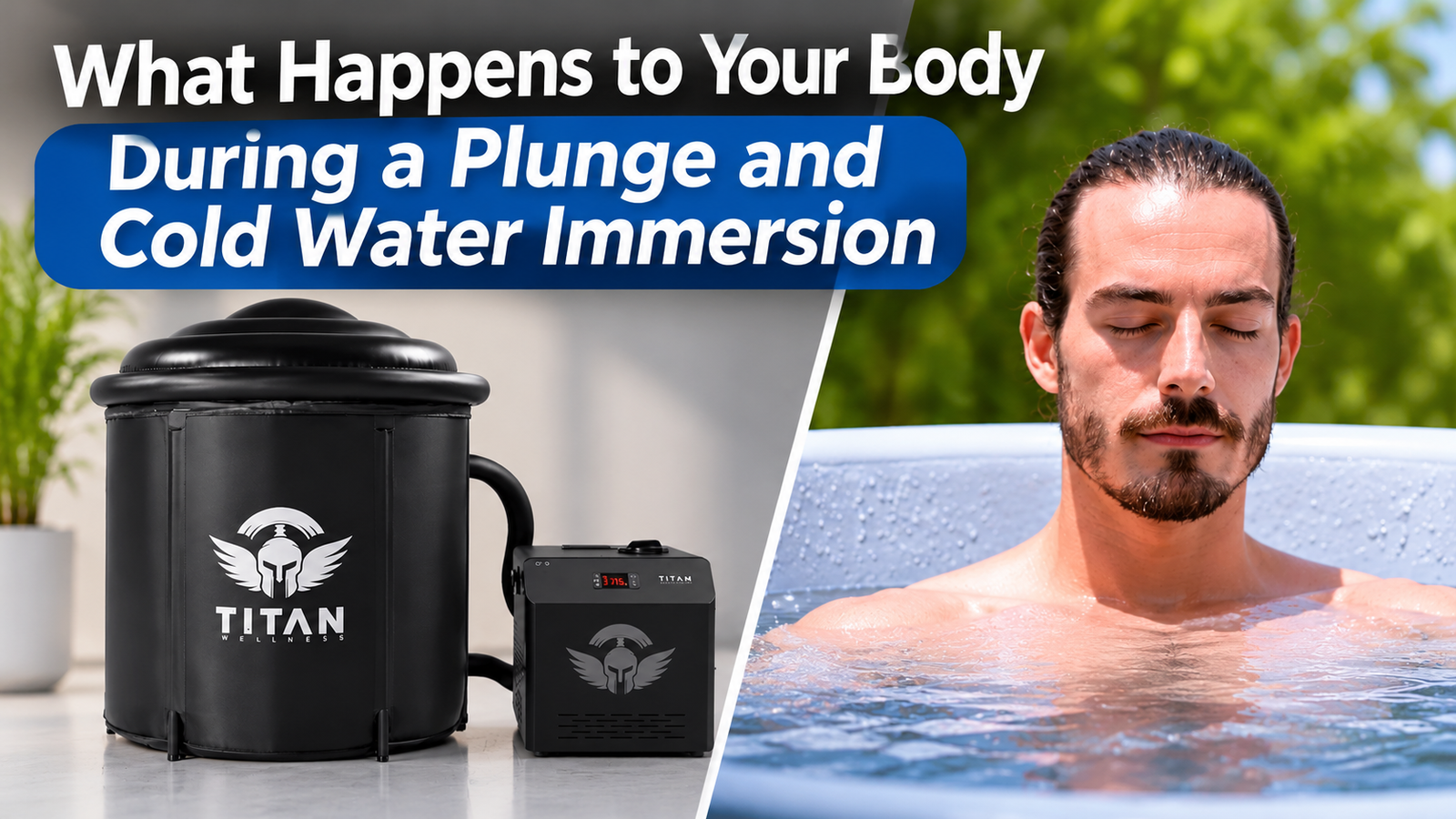
- November 17, 2026
Ninety seconds. That’s how long the worst part of a cold plunge lasts. Your skin stings. Your heart races. Your lungs gasp for air. Then something shifts. Your breathing slows. Your mind clears. Many people say they feel amazing.
Why does that happen? A plunge sets off a fast chain reaction inside your body. Blood vessels tighten. Heart rate jumps. Stress hormones surge. Then your body settles, and the calm kicks in.
This guide explains cold water immersion step by step. You’ll learn what happens in the first minute. You’ll see what the research really shows. You’ll also find out which temperatures are safe to start with. Titan Wellness builds every Titan Wellness cold plunge system to make safe, steady cold water therapy easier at home.
What Does Immersion in Cold Water Do to the Body?
Start with the basics. Cold water steals heat from your skin fast. In fact, water pulls heat away from your body about 25 times faster than air does. So your body goes into protect mode right away.
It is not an exaggeration to say that your nervous system dictates how everything runs. For example, cold water immersion triggers your nervous system to speed up heart and breathing rates, and constrict blood vessels in an effort to keep your vital organs warm. The American Medical Association explains the exact same thing when detailing what to expect when taking an ice bath.
Your nervous system runs the show. Heart rate & breathing can jump, and blood vessels narrow to keep warm blood close to your vital organs. The American Medical Association describes the same pattern in its guide to cold plunging.
Every cold immersion session follows that script. What changes is the water temperature, how long you stay, and your own health. That’s why a calm, steady routine beats a heroic one. Curious how a machine pulls that heat back out of the water? Here’s how a cold plunge chiller works.
The First 90 Seconds: Why Everyone Gasps
The first 90 seconds are the hardest part. The moment you get in, thousands of cold receptors in your skin fire at once. That’s the cold shock response. You’ll probably gasp. Your breathing may speed up a lot, and your heart rate & blood pressure climb as your stress system switches on.
This peaks in the first 30 to 90 seconds. It’s also the riskiest stretch of any cold plunge, which is why you never just leap in.
Here’s the good news. Your body gets used to it. After a few sessions, the shock fades. Slow breathing helps a lot too. Breathe out long and slow, drop your shoulders, & stay still until the urge to gasp passes.
Your cold plunge tub matters here. A sturdy tub, easy entry, and steady water temperature all make that first minute feel more doable. If you’re shopping, the Titan Bravo cold plunge tub is a compact place to start.
A Few Minutes In: What Your Heart, Blood, and Muscles Do
Once the shock passes, your breathing calms down. Now your body’s busy trying to stay warm. Blood vessels in your skin and limbs stay narrow. Your heart keeps sending blood to your core. And you start burning more fuel to make heat.
That part’s measurable. In one lab test, metabolic rate went up 350% during an hour in 14°C (57°F) water. A titan immersion session at home will be much shorter, so your numbers will be smaller. The direction is the same, though.
You stay too long and your core temperature drops, so shorter sessions are more efficient. When you leave the session your blood vessels open up again and blood flows to your skin, so make sure to dry off and put on some warm layers. Many people find a cold water immersion session helps with feelings of warmth and tingly sensations. A lot of people also notice it helps with mental clarity.
Athletes use cold water immersion therapy to ease sore muscles after tough workouts. Here’s the whole timeline at a glance.
| Stage | What’s happening inside | What you might feel |
| First 90 seconds | Cold shock. Breathing, heart rate, and blood pressure rise. | Gasping, tight chest, urge to bolt |
| A few minutes in | Breathing settles. Skin blood vessels stay narrow. | Calmer mind, numb skin |
| Longer sessions | Body burns more energy. Core temperature can fall. | Shivering, tiredness |
| After you get out | Blood vessels reopen. Warm blood returns to your skin. | Warmth, alertness, calm |
The Brain Chemistry: What the Dopamine Research Shows
You’ve probably heard the dopamine claim. So where does it come from? The most cited cold plunge dopamine increase study was published in 2000 in the European Journal of Applied Physiology. Researchers had young men sit in water up to their necks for one full hour. The water was 14°C (57°F).
The numbers were big. Norepinephrine rose 530%. Dopamine rose 250%. Heart rate went up 5%, and blood pressure went up too: 7% for the top number and 8% for the bottom. Cortisol didn’t budge.
Norepinephrine ties to alertness and focus. Dopamine ties to motivation and mood. So it makes sense that people feel energized after a plunge.
But keep the fine print in mind. It was a small group of young men. They stayed in for an entire hour, which is way longer than a normal home session. So don’t expect those exact numbers from a few minutes in the water. The researchers also pointed out that the cold response came mainly from more activity in the sympathetic nervous system, your body’s fight or flight side.
Benefits of Cold Immersion: What’s Real and What’s Hype
Let’s be honest about this part. People use cold water therapy for a few solid reasons. Many say they’re less sore after training. Many feel more alert and focused. Some like the mental challenge, because staying calm in cold water is a skill. And plenty of people just love how refreshed they feel afterward.
The American Medical Association says repeated cold exposure may help your body adapt to stress. It also says a plunge isn’t a cure all. A plunge won’t fix illness, and it won’t melt body fat. Your body does burn a few extra calories to stay warm, so call that a small bonus. Food, exercise, and sleep still do the heavy lifting.
Want to pair cold with heat? Here’s how cold plunge vs sauna stacks up.
What’s the Best Temperature for a Cold Plunge?
People search for the optimal temperature cold plunge therapy health benefits all the time, and the answers land in the same place: 50°F to 59°F (10°C to 15°C). That’s cold enough to trigger your body’s response. It’s also mild enough for most healthy adults to handle.
Colder isn’t always better. Water below 40°F (4°C) is for experienced users only, and beginners should skip anything under 45°F. The cold plunge temperature guide breaks down every range if you want the details.
Time matters too. Start with one minute. That’s enough to get your body responding. Then add a little more as you get comfortable.
Ice immersion is a bit like that, with one crucial difference. Unlike ice, which melts and changes, a Titan Cold Plunge Chiller unit provides consistent, even cooling for the duration of the immersion session. To cater to your individual needs, there are three options available. The 1/3, 1/2 and 1 chiller models. A unit with a higher Horsepower will better cater to a warmer climate.
Who Should Be Careful?
Cold water immersion isn’t for everyone. The American Heart Association advises that a quick plunge may lead to a sharp spike in your heart rate, blood pressure, and breathing. It also raises the potential of your getting too cold, i.e. hypothermia.
In all such situations, you should check with your physician before proceeding. Cold therapy is challenging rather than terrifying. A few simple rules help everyone:
- Start slow and keep sessions short
- Skip very cold water as a beginner
- Get out if you feel unwell
- Stay hydrated
Setting up the right matters too. If you’re new to gear, Titan’s cold plunge setup guide walks you through it. A plunge helps with recovery, but it doesn’t replace medical care.
Making It Easier With a Titan Plunge
Here’s a practical problem. A routine only sticks if the water’s ready when you are. That’s where a titan plunge setup helps. It chills your water and holds the temperature, so you skip the bags of ice. You pick the number, and the chiller keeps it there.
So, is Titan cold enough? Titan says its Gen V chillers can cool water down to 37°F. Cooling time depends on your tub size, water volume, and how hot it is outside. Want the full breakdown? Read Titan Wellness review of the chiller range.
Not sure which setup fits you? Reach out to the Titan team and ask.
Ready to Start Your Plunge Routine?
Cold water immersion works best when you keep it simple. Start slow. Keep your sessions short. It should feel challenging, never scary. Hold the water at a steady temperature. Let your body adapt a little more each week. Small steps win. That’s how a plunge becomes a habit.
Ready to build yours? Explore a titan cold plunge setup that fits your space. A Titan Wellness cold plunge makes steady, repeatable sessions easy at home. Want to learn more first? Read these blogs page for guides on temperature, setup, and recovery.
FAQs
Q1. How will a cold plunge change my physiology?
Your heart rate and breathing increase quickly. There is also an increase in body heat as the blood vessels become constricted. After several minutes, things become calm, and people start to become very alert.
Q2. How cold should a beginner plunge be?
Start between 50°F and 60°F. Stay out of water below 45°F until you’ve built some experience.
Q3. Is a one minute plunge enough?
Yes, when you’re just starting out. One minute gets your body responding. Add time slowly from there.
Q4. What is the right thing to do after a cold plunge?
Get yourself completely dry and then put on layers of warm clothes. Light exercise like stretching will help you to ease your body into normal routines.
Q5. Who must check with their doctor before trying a plunge?
Anyone with a history of blood pressure issues, heart problems or other health concerns.
RECENT BLOGS
- November 17, 2026
What Happens to Your Body During a Plunge and Cold Water Immersion
- November 13, 2026
Red Light Therapy vs Heat Therapy: Which Works Better for Pain (2026)
- November 2, 2026
1/3 HP vs 1/2 HP vs 1 HP Chiller: Understanding the Difference
- October 13, 2026
The 5 Best Portable Cold Plunge Tubs
More Blogs
Recent Blogs
What Happens to Your Body During a Plunge and Cold Water Immersion
November 17, 2026
Ninety seconds. That’s how long the worst part of a cold plunge lasts. Your skin stings.
Read More
Red Light Therapy vs Heat Therapy: Which Works Better for Pain (2026)
November 13, 2026
Red light therapy and heat therapy both help with body pain after exercise. But both of
Read More
1/3 HP vs 1/2 HP vs 1 HP Chiller: Understanding the Difference
November 2, 2026
Picking a cold plunge chiller can feel confusing. You will see three options a lot: 1/3
Read More
The 5 Best Portable Cold Plunge Tubs
October 13, 2026
A cold plunge can fit well into a recovery routine. But picking the right tub is
Read More